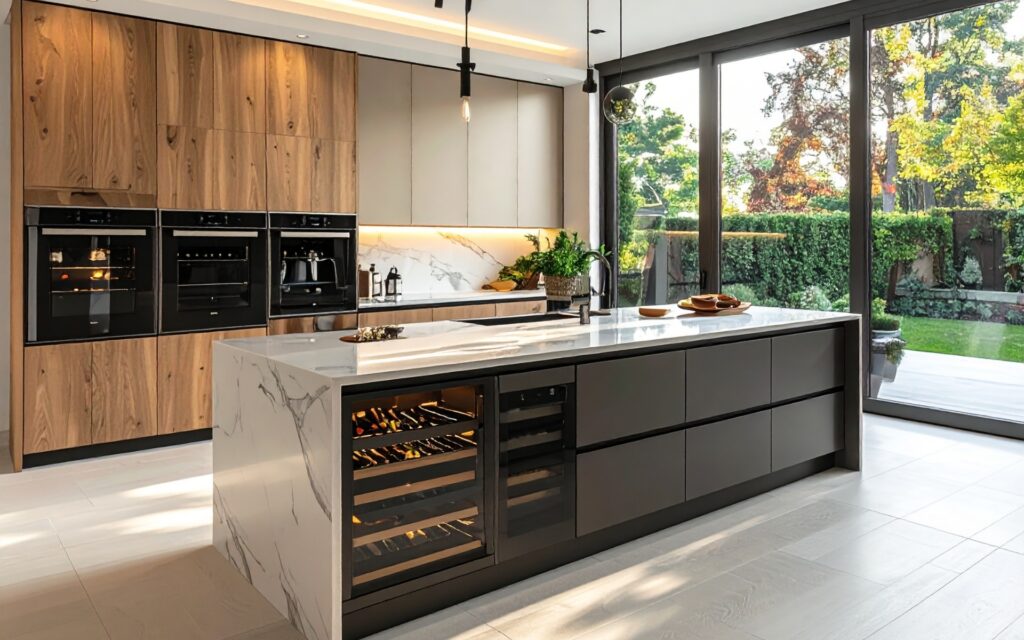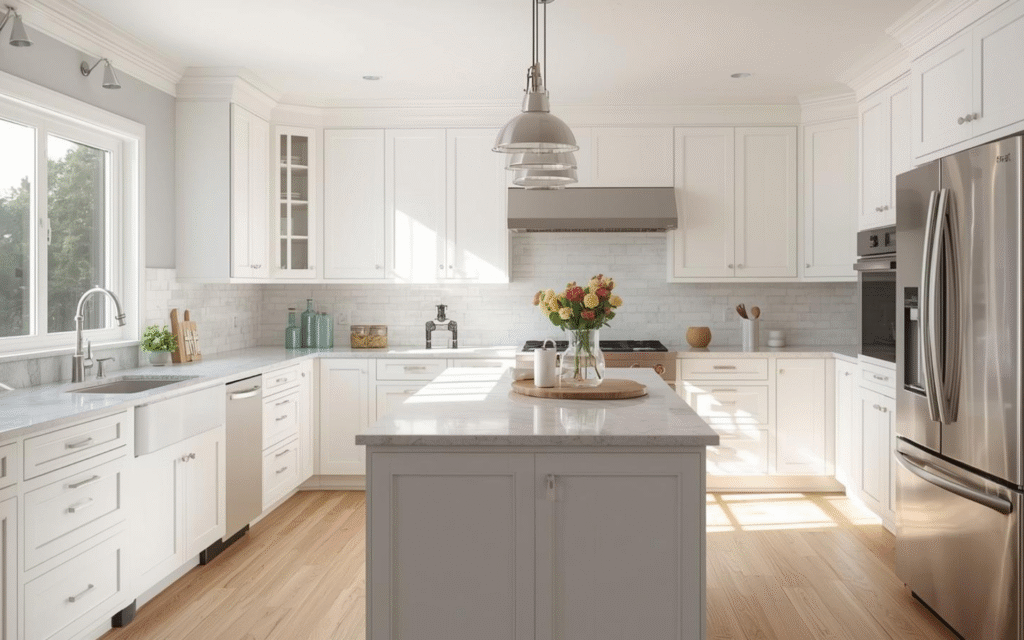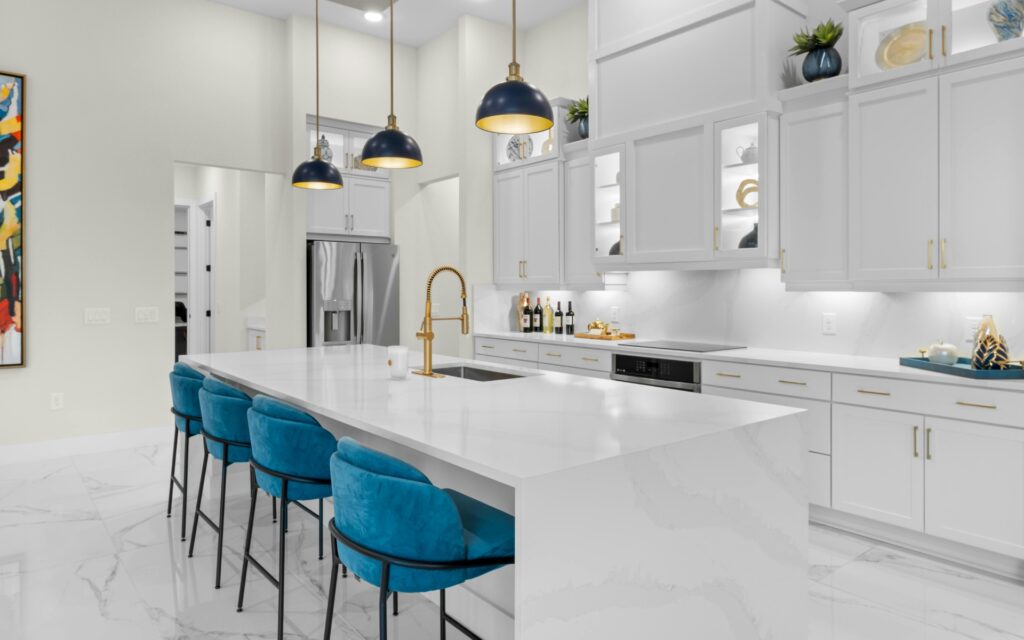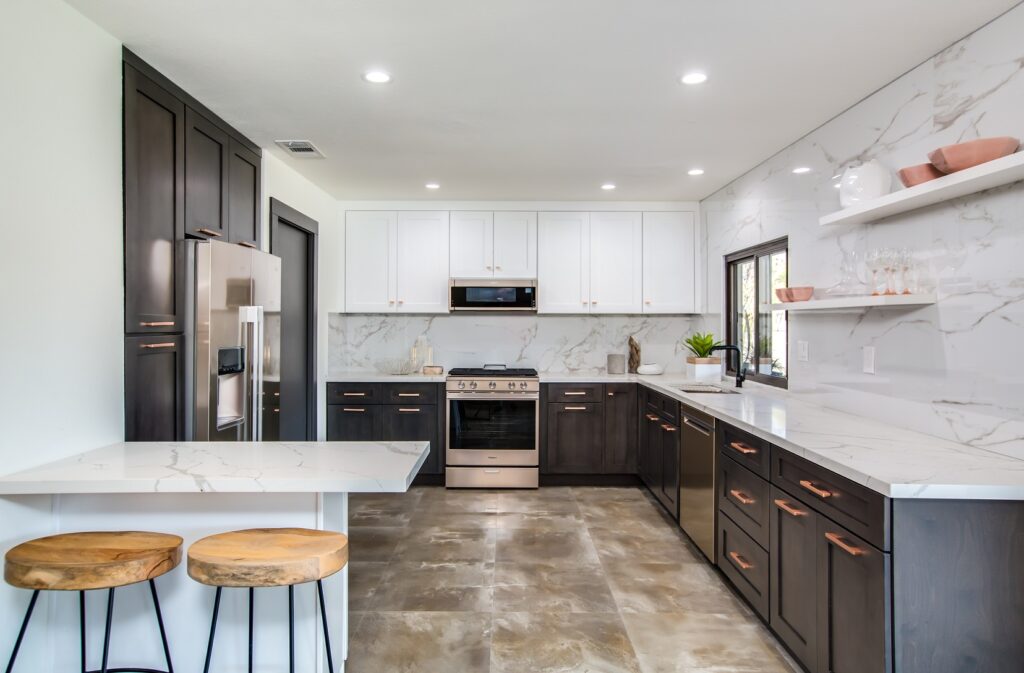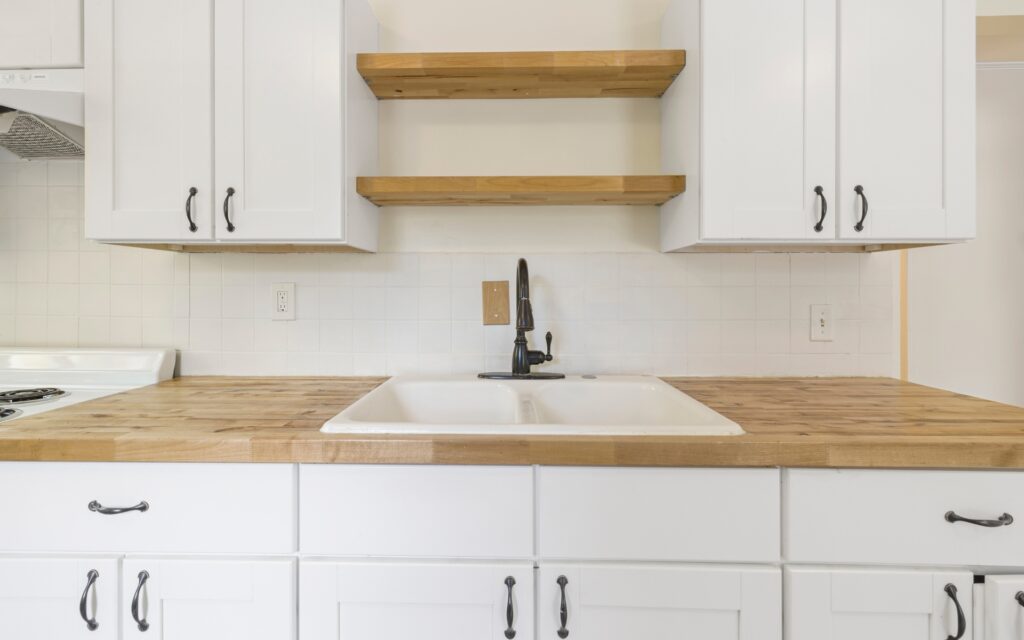


Flipping through design magazines, you’ve probably noticed those stunning wooden kitchen countertops that look warm and inviting. They photograph beautifully, no doubt about it. But here’s what those glossy images don’t show you: the constant maintenance, the inevitable damage, and the frustration that comes with choosing wood as a countertop material for your busiest room.
Of course, wood makes any room look better. But this material doesn’t work as well in the kitchen as you might think. Before you decide on that rustic style, let’s talk about why most people who have wood kitchen countertops have more challenges than happy memories.
The Moisture Problem That Never Goes Away
Water is everywhere in your kitchen. You’re washing vegetables, cleaning dishes, wiping up spills, and dealing with steam from cooking pots. Every single one of these activities becomes a potential disaster when you have wood kitchen countertops.
Water damage isn’t just a possibility with wood surfaces. It’s practically guaranteed. Even a small puddle left sitting for an hour can leave dark rings that penetrate deep into the grain. According to HGTV, wood surfaces require immediate attention to any moisture exposure, making them one of the least practical choices for busy kitchens.
How Wood Kitchen Countertops React to Daily Use
Think about your morning routine. You’re making coffee, rinsing fruit, maybe defrosting something in the sink. Each activity introduces moisture that wood absorbs like a sponge. Over time, this constant exposure leads to warping that creates uneven surfaces and gaps where your countertop meets the wall.
Cracking follows close behind. As wood expands with moisture and contracts when dry, the repeated stress fractures the material. You’ll notice splits developing along the grain, especially near the sink and stove areas, where temperature and humidity fluctuate most dramatically.
Staining Issues You Can’t Ignore
Red wine spills at dinner parties. Tomato sauce splatters while you’re cooking pasta. Coffee rings from your morning cup. All of these everyday occurrences become permanent reminders on wood kitchen countertop surfaces.
Unlike the most durable countertop for a kitchen, options like stone, wood is incredibly porous. Stains don’t just sit on the surface where you can wipe them away. They soak in, becoming part of the wood itself. Even with multiple coats of sealant, you’re fighting a losing battle against discoloration.
Oils from food preparation seep into the grain. Acidic substances like lemon juice or vinegar eat away at protective finishes. Before long, your once-pristine surface looks worn and spotted, no matter how carefully you try to maintain it.
The Endless Maintenance Cycle
Here’s what nobody tells you about wood as a countertop: it becomes a part-time job. You’ll need to sand, seal, and oil the surface regularly just to keep it functional. We’re not talking about an annual deep clean. This is monthly, sometimes weekly attention that your countertops demand.
Maintenance heavy doesn’t even begin to describe the commitment. First, you’re sanding away scratches and stains every few months. Then comes the resealing process, which means clearing your entire counter, applying multiple coats, and waiting for each layer to cure. During this time? Your kitchen is basically out of commission.
According to Houzz, homeowners spend significantly more time and money maintaining wood surfaces compared to stone alternatives. Those hours add up quickly when you’re constantly worried about problems with wooden worktops.
What Regular Care Actually Looks Like
Daily oiling keeps the wood from drying out. Weekly inspections catch damage early. Monthly deep conditioning prevents cracking. Annual refinishing restores the protective barrier. Sound exhausting? That’s because it is.
Compare this to stone surfaces that need nothing more than a quick wipe with soap and water. The difference in effort is staggering, especially for families juggling work, kids, and everything else life throws at you.
Fragility in Your Most Active Space
Dropped a cast-iron pan? Set down a hot pot without thinking? Sliced vegetables directly on the surface? Each of these common kitchen moments causes lasting damage to wood kitchen countertops.
Fragility makes wood impractical for real-life cooking. Dents appear from normal use. Burns mark the surface when hot cookware makes contact. Deep scratches develop from knives, utensils, and even the rough bottoms of dishes and appliances.
Butcher block countertops get marketed as tough and resilient, but even these thicker wood surfaces suffer from the same fundamental weaknesses. Yes, you can sand out some damage, but you’re right back to that maintenance cycle we talked about earlier.
Heat sensitivity creates another problem. Placing a hot baking sheet directly on wood leaves scorch marks that no amount of sanding can completely remove. You’ll need trivets and hot pads for everything, which defeats the purpose of having counter space.
Limited Options and Design Constraints
Walk into any showroom, and you’ll quickly realize that wood offers fewer options compared to stone materials. You’re limited to whatever species are durable enough for countertop use, which narrows your choices considerably.
Looking for the best wood for a countertop? You’re probably choosing between maple, oak, walnut, or cherry. That’s about it. Stone countertops, on the other hand, come in hundreds of colors, patterns, and finishes.
Design flexibility suffers too. Wood doesn’t work well in wet areas, so you can’t extend it to windowsills above the sink or create seamless integrated backsplashes. You’re constantly working around the material’s limitations instead of having it work for you.
The Cost
Sure, kitchen countertop costs vary widely depending on materials and installation. Some people assume wood saves money compared to stone. In reality, when you factor in the constant maintenance products, refinishing supplies, and eventual replacement, wood often ends up costing more over its lifetime.
Initial installation might seem budget-friendly. Then you’re buying food-safe oils every month, sanding equipment, sealants, and cleaning products specifically formulated for wood. These expenses accumulate year after year.
Replacement costs hit harder, too. Stone surfaces can last 25 years or more with minimal care. Wood typically needs replacing within 10 to 15 years, sometimes sooner if maintenance lapses or damage accumulates. You’re essentially paying twice for the same counter space.
Better Alternatives for Kitchen Countertops Worth Considering
You don’t have to sacrifice style for functionality. When you opt for granite, marble, or quartz, you get surfaces that handle everything your kitchen throws at them without constant babying.
These materials resist water, heat, and stains naturally. They don’t require monthly maintenance routines or annual refinishing projects. A simple wipe-down keeps them looking pristine for decades.
Stone options also offer an incredible variety. Want the look of wood? Some quartz patterns mimic wood grain beautifully while providing all the durability benefits of engineered stone. You get the aesthetic without any of the performance problems.
Make the Right Choice for Your Home
For your modern kitchen remodel, you want countertops that perform as beautifully as they look without endless maintenance. Wood kitchen countertops might look appealing in carefully styled photos, but daily reality tells a different story.
Think about your cooking style, your family’s needs, and how much time you want to spend on maintenance. For most homeowners, the answer becomes clear pretty quickly. Durability, practicality, and long-term value all point toward stone surfaces that perform beautifully year after year.
Ready to explore countertop options that work as hard as you do? CabinetLand specializes in helping homeowners find the perfect surfaces for their kitchens. Our team guides you through materials, styles, and installations that fit your lifestyle and budget. Contact us today for a free consultation. Let’s create a kitchen that’s both stunning and genuinely functional for years to come.