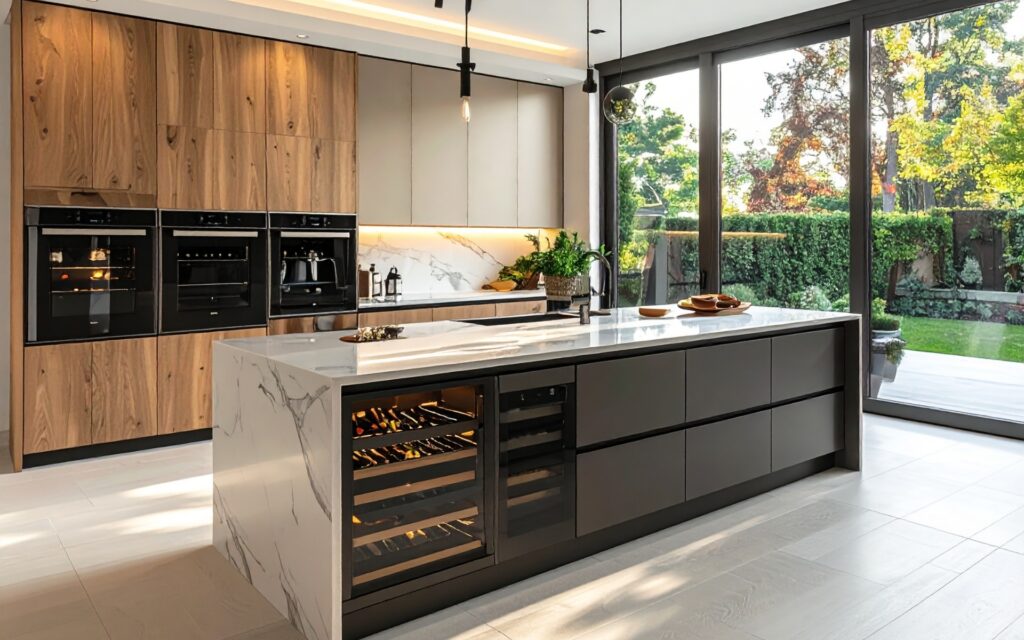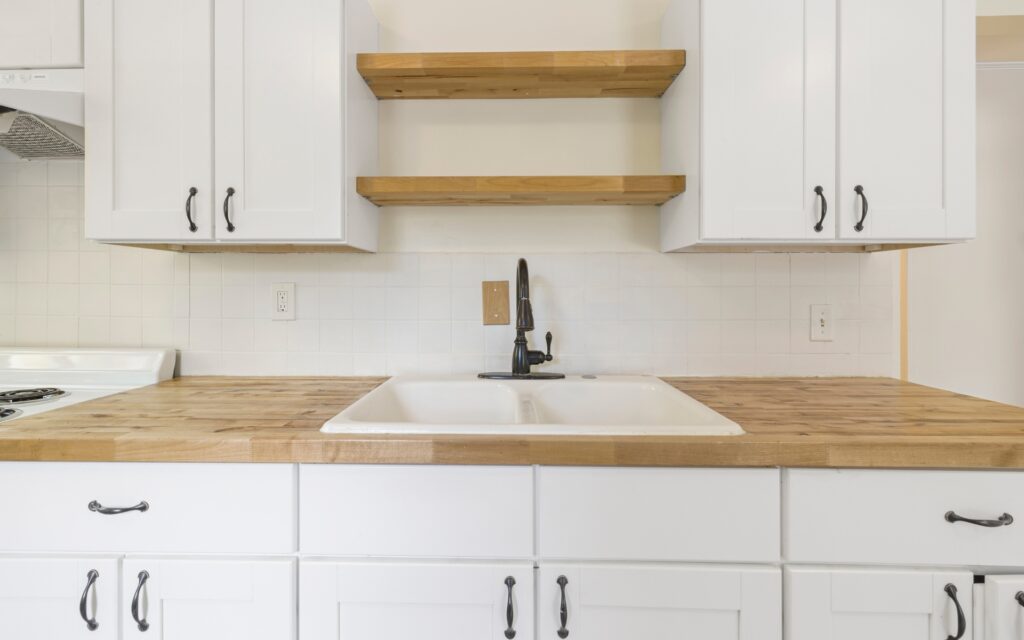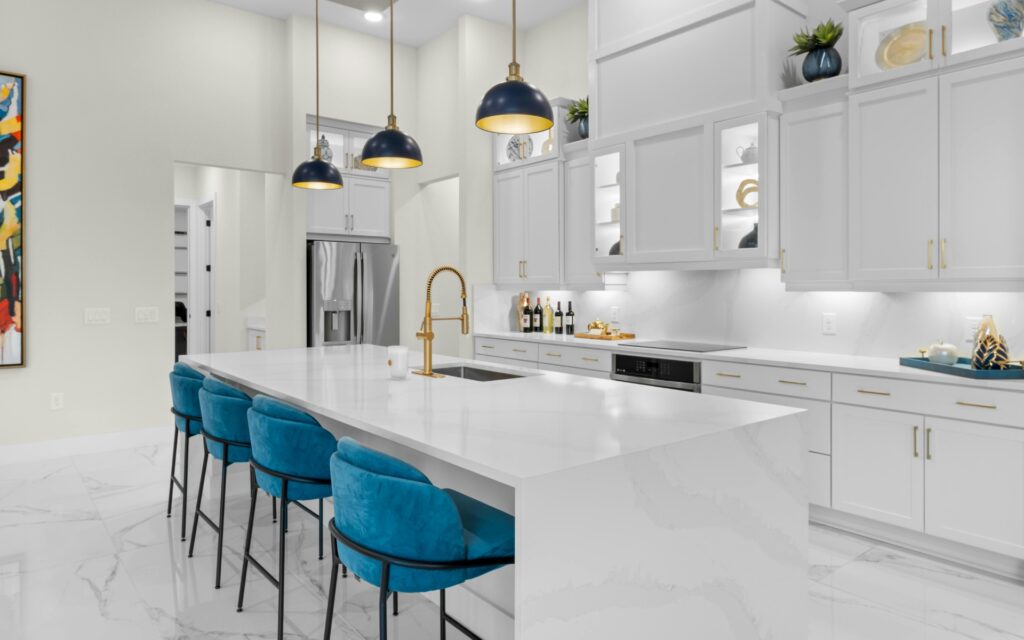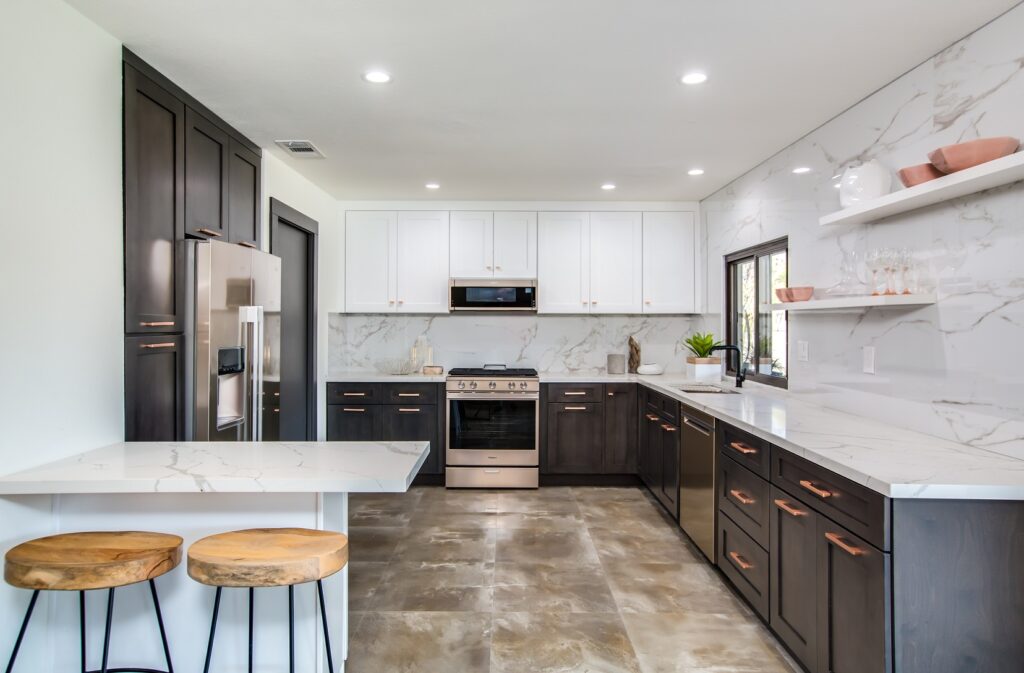


You’ve probably heard about medium-density fiberboard but aren’t quite sure what it is or whether it belongs in your kitchen. Let’s clear up the confusion and help you understand why this engineered material has become a go-to choice for kitchen remodeling design alike.
What Exactly Is Medium-Density Fiberboard?
Think of MDF as wood’s engineered cousin. Instead of cutting boards directly from trees, manufacturers break down wood fibers, mix them with resin and wax, then compress everything under high heat and pressure. What emerges is a dense, smooth panel that’s incredibly uniform from edge to edge.
Unlike solid lumber with its knots, grain variations, and natural imperfections, this material offers complete consistency. Every sheet looks identical to the next, which matters when you’re trying to achieve a seamless look across multiple cabinet doors and drawer fronts.
How It’s Made
Breaking down the manufacturing process helps you understand why this material performs the way it does:
- Wood fibers get broken down into tiny particles through mechanical and chemical processes
- Resin binders and wax get mixed with the fibers to create adhesion and moisture resistance
- High pressure and heat compress the mixture into dense, uniform panels
- Panels get sanded smooth and cut to standard sizes for distribution
This controlled manufacturing creates predictable results that natural wood simply can’t match.
Key Benefits of MDF For Your Kitchen
Let’s talk about what makes this material stand out in cabinet applications. Cost ranks high on most homeowners’ priority lists, and this engineered option delivers serious savings compared to solid wood without looking cheap. You’re not sacrificing quality, just paying less for an alternative that performs beautifully in the right applications.
Why Homeowners Choose This Material
According to Houzz, homeowners who choose this material for painted finishes report high satisfaction rates because the smooth surface eliminates visible grain patterns that can show through paint over time. Plus, the density provides excellent screw-holding power for hinges and hardware.
Consistency is another major advantage. Ever noticed how wood grain can vary wildly between cabinet doors? With this material, every piece matches perfectly. Your kitchen cabinets will have a uniform appearance that’s nearly impossible to achieve with natural lumber, especially across large installations.
Perfect Applications For MDF For Cabinets
Where This Material Shines
Door and drawer fronts represent the sweet spot for this engineered material. These visible surfaces benefit from the smooth finish and paint-ready characteristics while avoiding heavy structural loads. Combined with plywood box construction, you get durability where it counts and beauty where it shows.
Face frames also work beautifully in this material. The ability to create crisp, clean profiles with routers and shapers lets cabinet makers achieve details that would be costly or difficult in solid lumber. Intricate moldings, precise edge treatments, and smooth transitions all come easier.
Ideal Uses Include:
- Cabinet door and drawer fronts in painted finishes
- Face frames and trim details
- Decorative panels and end caps
- Crown molding and trim pieces
- Non-structural shelving in dry locations
Where To Avoid Using It
Let’s be honest about where this material falls short. Water exposure is its kryptonite. Leave it soaking, and it swells, deteriorates, and loses structural integrity. Applications to skip:
- Cabinet box construction in wet areas
- Under-sink cabinets or moisture-prone zones
- Structural shelving for heavy items
- Any location with direct water contact
- Outdoor or high-humidity applications
Why Paint and Medium-Density Fiberboard Are Best Friends
Planning a painted finish? You’ve found your ideal substrate. The ultra-smooth surface accepts paint like a dream. No grain raising, no tannin bleed-through, no texture showing through your carefully applied coats.
Painting Advantages
This characteristic makes it easy to paint, whether you’re doing it yourself or hiring professionals:
- Primers adhere beautifully to the uniform surface
- Topcoats lay down smoothly without texture interference
- No wood grain telegraphing through finished paint
- Color consistency across all cabinet surfaces
- Easy touch-ups and future repainting
Want to change colors down the road? Simply sand lightly and repaint without worrying about grain patterns reappearing.
Stability That Resists Warping
Wood expands and contracts with humidity changes. Anyone who’s lived through a humid summer knows how sticky wooden drawers can become. Engineered boards handle moisture fluctuations more predictably because the fibers run in multiple directions rather than following a single grain pattern.
Climate Performance
According to HGTV, this stability makes the material particularly suitable for climates with significant seasonal changes. Your cabinet doors stay flat and true instead of twisting or cupping like wood cabinets sometimes do when conditions shift.
Benefits of this dimensional stability include:
- Doors maintain proper alignment year-round
- Drawer fronts stay flat without warping
- Reduced seasonal adjustment needs
- Consistent gaps and reveals between doors
- Long-term performance in temperature fluctuations
Choosing the Best MDF For Cabinets By Grade
Not all engineered boards are created equal. Density ratings matter because they affect everything from durability to machinability. Higher density versions cost more but offer superior screw holding, better edge detail, and improved moisture resistance.
Quality medium-density fiberboard: Indicators To Look For
Look for products specifically manufactured for cabinet applications. These formulations often include moisture-resistant additives and tighter density tolerances than standard construction-grade sheets. Your cabinet installer can recommend appropriate grades for your specific project.
Key specifications include:
- Density rating (higher is generally better for cabinets)
- Moisture-resistant formulations for kitchen use
- Smooth, defect-free surfaces ready for finishing
- Consistent thickness throughout the panel
- Low formaldehyde emissions for indoor air quality
Perfect For Your Modern Kitchen Remodel
Contemporary designs with clean lines and painted finishes are where this material truly excels. Shaker-style doors, flat-panel European designs, and sleek modern profiles all benefit from the smooth, grain-free surface that accepts any finish beautifully.
Color and Style Flexibility
Color choices explode when you’re working with this substrate. Are those the trendy best kitchen cabinet colors like navy, sage green, or dramatic black? They all look stunning on properly prepared and painted surfaces. You’re not fighting wood grain or dealing with color variations between doors.
Popular kitchen remodeling trends that work beautifully:
- Two-tone color schemes with contrasting island and perimeter cabinets
- Bold, saturated colors for statement-making kitchens
- Soft, muted tones for calming, minimalist spaces
- High-contrast combinations with light walls and dark cabinets
- Monochromatic schemes in varying shades
Is It The Best Choice For Kitchen Cabinets?
That depends entirely on your priorities and project scope. For painted finishes and contemporary designs on a reasonable budget, this material absolutely deserves consideration. Its consistent, affordable nature and paint-ready surface make it genuinely competitive without looking cheap.
Strategic Material Combinations
Combine it strategically with other materials, and you get the best of all worlds:
- Plywood boxes for structural durability and moisture resistance
- This engineered material is for doors and visible painted surfaces
- Solid wood for specific accent details and natural finishes
- Veneer options for wood-look finishes at lower costs
This hybrid approach creates a cabinet system that performs beautifully while controlling costs effectively.
Ready To Explore Your Cabinet Options?
Understanding materials helps you make smarter decisions about your kitchen investment. Now that you know what medium-density fiberboard brings to the table, you can evaluate whether it fits your project needs and design goals.
Every day at CabinetLand, we assist clients in choosing the right materials. Our team knows which applications work best on particular surfaces, and we’ll help you find solutions that fit your budget, timeframe, and design goal. Get in touch with us today for a free consultation. We’ll talk about your project in depth, show you real examples, and make a strategy to make your dream kitchen a reality. Get in touch now, and let’s start making something amazing together.